SCI, Seafarers, and Soccer Through the Years
by Stefan D-W Tisdale
Archivist
This summer, the World Cup brought international soccer back to New Jersey’s Meadowlands, just ten miles upstream from SCI’s International Seafarers Center, but soccer has been here since its beginnings in America, along with seafarers and SCI.
Post-Civil War New York saw a great flowering of athletic clubs, beginning with elite organizations like the New York Athletic Club (1868) and quickly spreading to more working class clubs, often associated with businesses, and a huge number of clubs associated with charity settlement houses. The new
athletic clubs pursued sports as diverse as boxing, baseball, and club swinging. Some clubs took up soccer, a sport newly-codified by elite English secondary schools and universities in 1863 (and definitively separated from rugby in 1871) that was spreading rapidly wherever the British Empire raised its flag. In America, that flag metaphorically waved over centers of fabric manufacturing as changes in trade laws placed high value on British skilled labor in that field and American cloth manufacturers promised opportunities for skilled workers from Britain who were experiencing employment pressure at home from changing technologies. These laborers started soccer teams and early American soccer competitions pitted textile towns with matches between the likes of Pawtucket, RI and Fall River, MA against Hoboken and the Meadowlands’ own Kearny, NJ. Steel workers also competed, including Bethlehem Steel and several New York harbor estuary shipyards, such as Red Hook’s Todd Shipyard.
Still, soccer players were rare enough in late 19th-century New York that the chance to scrimmage with new faces from an English ship—importing the most up-to-date game play—had an undeniable allure. The earliest record of seafarers playing soccer in the Port of New York dates to 1890. In November of that year, a team from the Cunard liner Umbria was defeated by the Brooklyn-based Nonpareil Club’s reserve team, which soccer historian Ed Farnsworth cites as consisting largely of staff from the New York Herald’s composing room. Such work-based teams were typical of early sports in New York, especially soccer, and
remain relatively common today. The match against the newspapermen must have appealed to the Umbria’s crew enough for them to traipse from their North (Hudson) River pier all the way to landlocked Ridgewood, Queens for the game—a daunting feat in the days before the subway system and a long trip even today
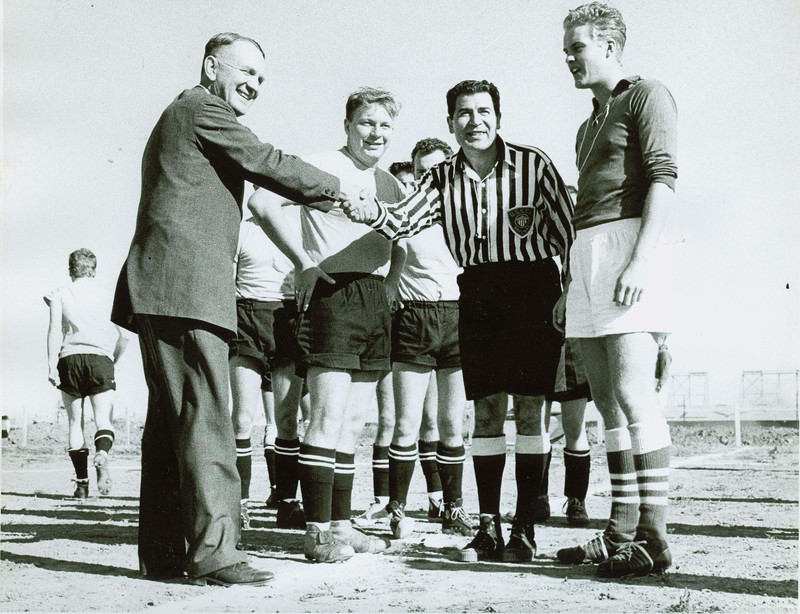
It appears that seafarers had their own soccer tournament by 1891, sponsored by Richard K. Fox, publisher of The National Police Gazette. Fox (whose magazine was a perennial favorite among seafarers) was something of a sports impresario, known for sponsoring prizes for a wide array of athletic feats. Possibly as early as 1909, and certainly by 1929, seafarer benevolent organizations were involved in, if not outright running, a seafarer soccer tournament.
Soccer first professionalized in America early in the 20th century. Several important matches were played at Todd Field, a soccer stadium erected as early as 1919 by Todd Shipyard near their drydocks in Red Hook, Brooklyn between Columbia, Lorraine, and Bush Streets. Seafarers continued to play all over the city in non-tournament games against amateur and professional teams (as league regulations or disregard for such regulations allowed). An 1884 New York Times article notes that liners would hire professional players in England and Scotland as crew in anticipation of an important match in New York. Likewise, businesses would often give a job to a good player, even importing professional players from Scotland and England
to work for the company while juicing its soccer team.
The Great Depression and World War II put an end to American professional soccer, but by April 1949, seafarer benevolent organizations, including SCI, were formalizing plans for reviving the seafarer soccer tournament. A May 1st New York Times article quotes the Norwegian Seamen’s Social Welfare Commissioner saying they had an arrangement with the Parks Department for the use of a soccer field in Brooklyn. It seems likely that this refers to Red Hook Stadium, a Robert Mosesera project from 1935. However, it’s possible that it refers to Todd Field, the soccer stadium built by Todd Shipyard for its soccer teams.
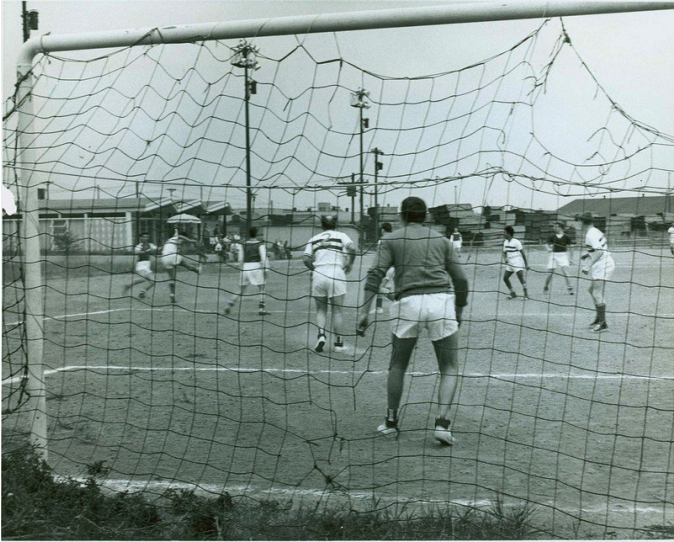
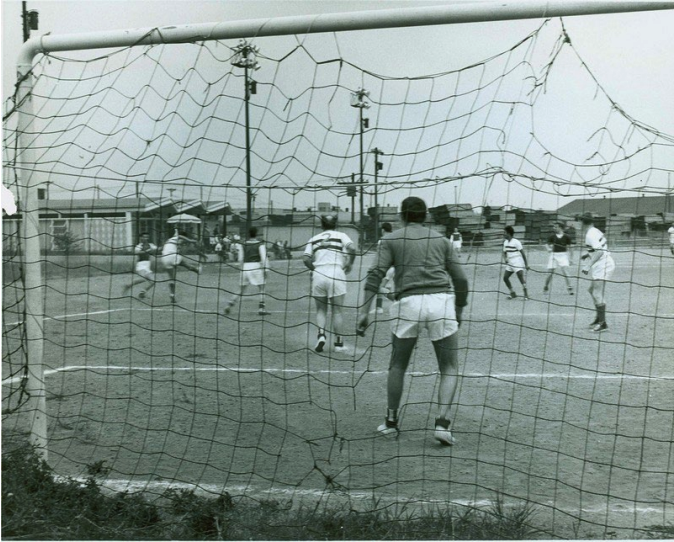
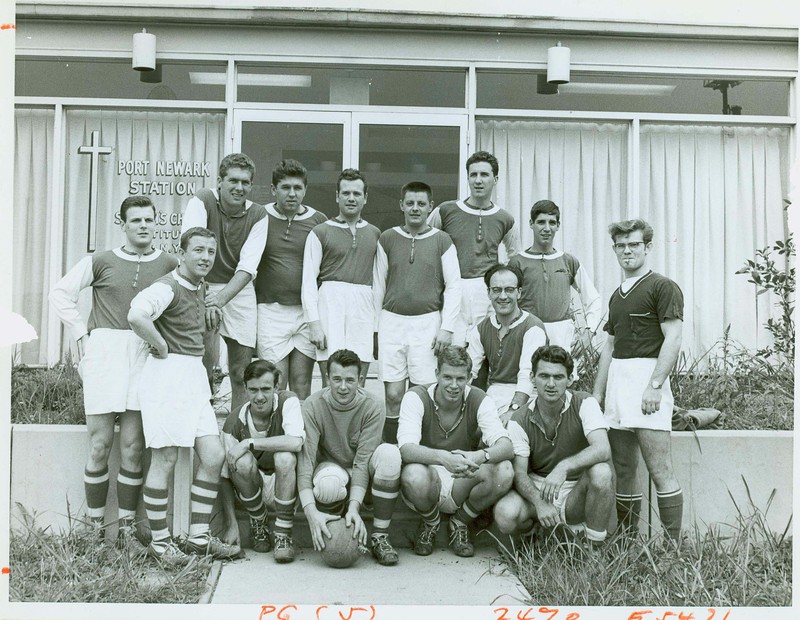
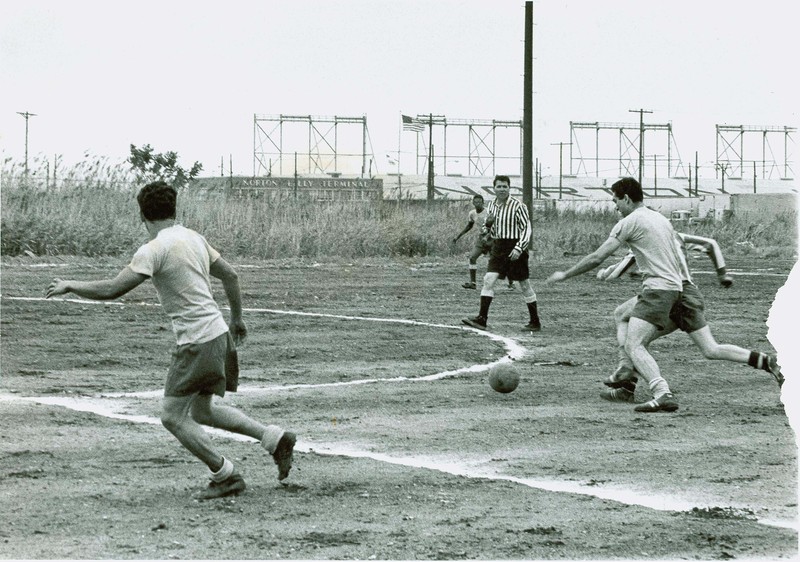
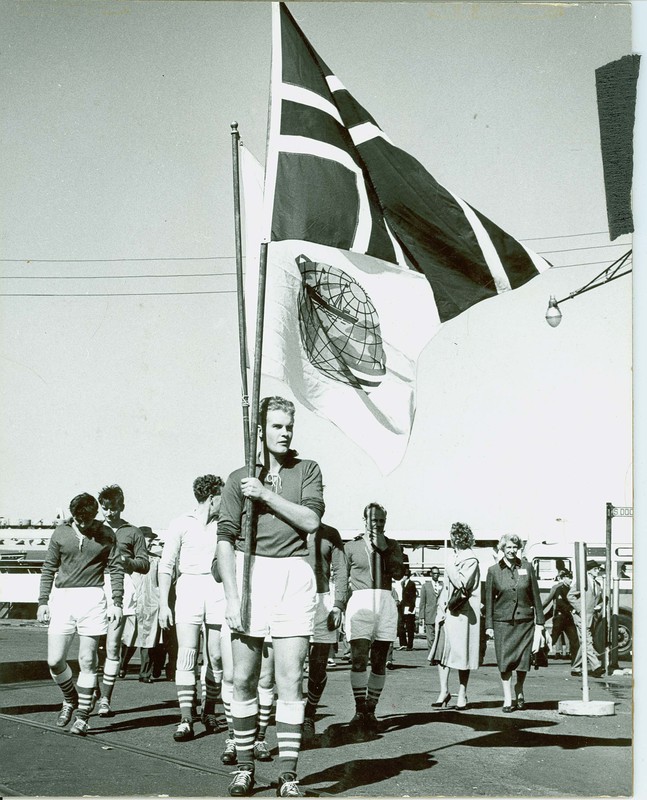
The article also notes that other soccer fields were in use, including one in Van Cortlandt Park and the stadium at Randall’s Island for big matches. Nonetheless, the article states a preference for a dedicated field for international seafarer soccer. SCI seized an opportunity to establish such a field on the newly landfilled tidal marsh meadowlands of Port Newark in 1961. That field would host soccer matches as well as an annual international sports week in coordination with Norwegian seafarer benevolent interests into the 1990s.
After a generation of hard play, the landfill supporting SCI’s soccer field no longer met our safety standards, and the field was given over to geese and more casual uses. Meanwhile, the Norwegian Maritime Authority organized a soccer tournament for cruise ship crews until the Covid-19 pandemic.