Relationships at the Heart of Seafarer’s Ministry
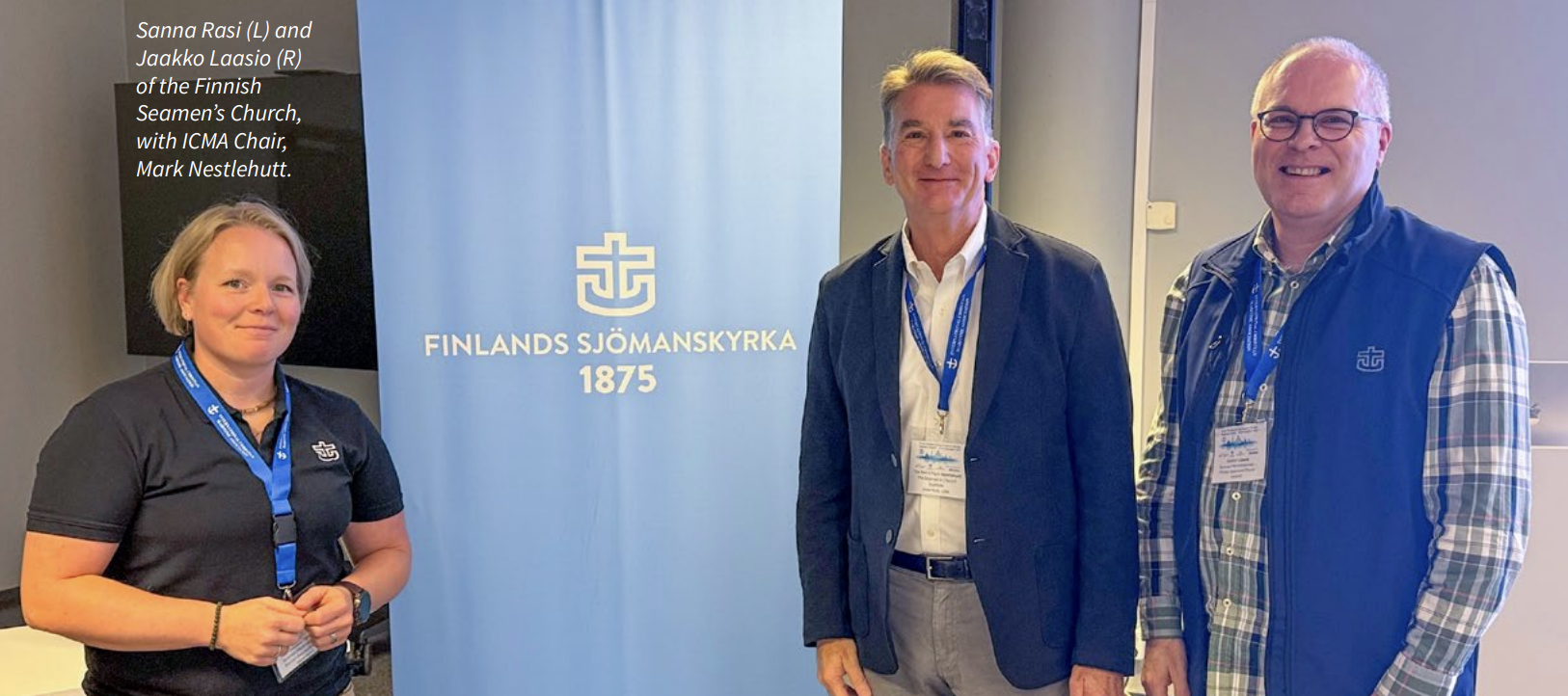
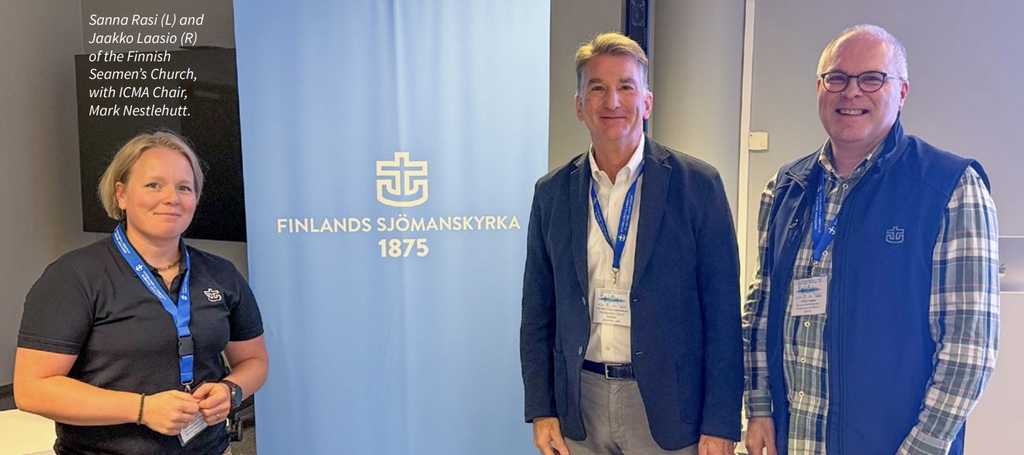
By the Rev. Mark Nestlehutt
President & Executive Director, The Seamen’s Church Institute
Chair, International Christian Maritime Association
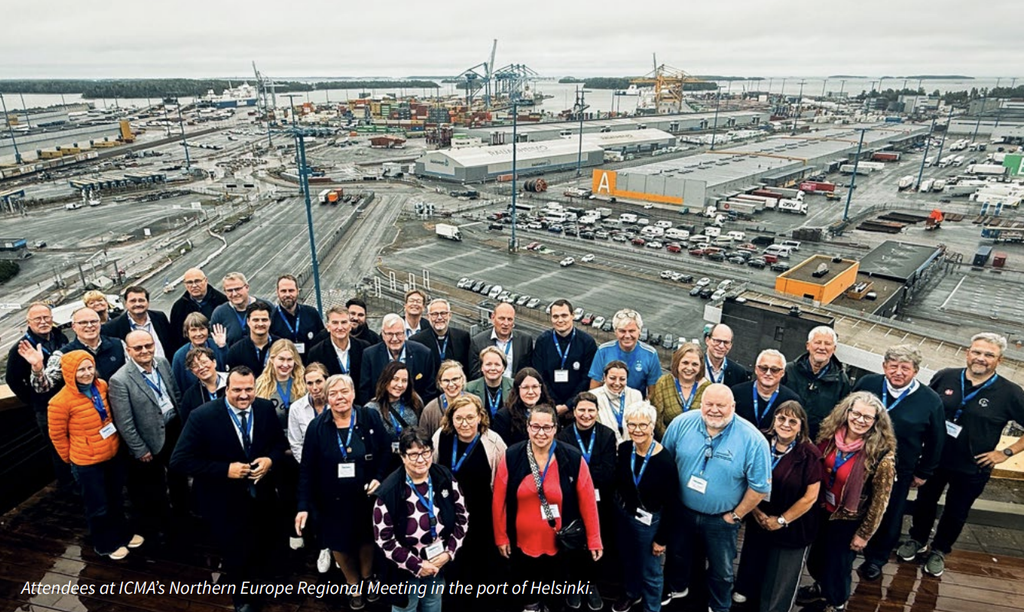
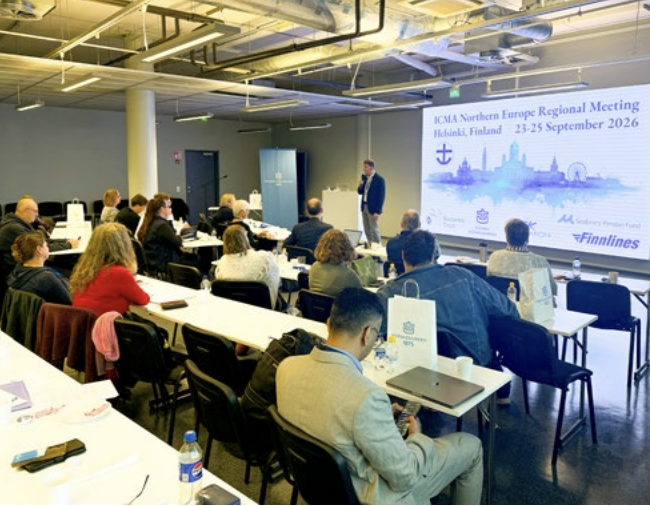
I recently had the opportunity to join colleagues from across Northern Europe for the International Christian Maritime Association (ICMA) Northern Europe Regional Meeting, held September 23–25 in Helsinki, Finland. As the meeting drew to a close, I was asked to offer a few reflections on what we had heard and discussed over our three days together.
At ICMA gatherings, I often find myself talking about “isms”—ecumenism and proselytism among them. This time, however, I found myself returning to something much simpler: relationships
For more than 190 years, relationships have been central to SCI’s ministry. Whether our Chaplains are stepping aboard a ship in Port Newark, meeting an inland mariner aboard a towboat on the Mississippi, or helping someone navigate a difficult situation through our Center for Mariner Advocacy, our work begins by meeting people where they are, listening to them, and earning their trust.
The meeting in Northern Europe was a reminder that those relationships extend well beyond SCI.
From One Chaplain to a Global Network
During the meeting, we heard the story of a Norwegian chaplain who knew a seafarer well enough to recognize when that person needed support and reached out directly. It was a simple example, but an important one. The chaplain understood the person—not simply the vessel, the company, or the circumstances.
That kind of connection is fundamental to chaplaincy.
But ships move, and the people aboard them move with them. A chaplain may meet a seafarer in one port and sense that something is not quite right. The vessel may sail the next day for another country, seemingly ending that opportunity for connection.
This is where relationships among maritime ministries become so important.
Through ICMA, SCI is part of an international network of chaplains and seafarers’ welfare organizations serving ports around the world. We may not have an SCI Chaplain waiting at a vessel’s next destination, but chances are good that we know someone who is there.
Without compromising confidentiality, one chaplain can reach out to another and simply say: There is someone aboard this vessel who may need a little extra attention when they arrive.
That ability to extend care beyond our own organization is one of ICMA’s great strengths. No single organization can be everywhere, but together our reach is extraordinary.
A Global Ministry for a Global Industry
Maritime ministry has changed considerably since many of our organizations were founded.
SCI was established in 1834 to serve mariners arriving in the growing Port of New York. Today, the ships entering our ports are crewed by men and women from nations around the world. The same is true across the global maritime industry.
A seafarer might encounter one maritime ministry in Rotterdam, another in Singapore, and an SCI Chaplain when the vessel reaches Port Newark.
The name of the organization providing that care should be secondary to the needs of the person standing before us.
That principle has been at the heart of ICMA since its creation in 1969. Organizations representing different Christian traditions recognized that they could accomplish more for seafarers by working together than by working independently. More than half a century later, that idea remains both relevant and practical.
We are greater than the sum of our parts.
Dignity and Respect for Every Mariner
Another theme running through our conversations was social justice.
Seafarers work within a global industry, but their experiences can differ significantly depending on nationality, employment arrangements, vessel type, flag state, and other circumstances. Some have access to strong support systems. Others can find themselves far from home, isolated, or unsure where to turn when problems arise.
For SCI, this speaks directly to a principle that has guided our ministry for generations.
We care for mariners because we recognize the humanity— and, from our faith perspective, a glimpse of the divine—in every person who comes before us. We see them. We listen to them. And we treat them as individuals rather than simply members of a workforce
It does not matter what nationality they are or what flag they sail under. When mariners come into our ports or encounter our Chaplains along the inland waterways, each deserves to be treated with dignity and respect.
That is as true in Newark, Paducah, St. Louis, New Orleans, and Houston as it is in ports throughout Northern Europe and around the world.
Relationships Make the Network Work
Regional gatherings such as this one also remind me that the relationships supporting this work are often built outside formal meetings.
They happen over meals, in conversations between sessions, sitting around a table at the end of the day—or, in Northern Europe, even talking in a sauna over a beer.
These moments may seem incidental, but they build familiarity and trust. We get to know the people doing similar work thousands of miles away. We learn about their challenges and resources, and they learn about ours.
Then, someday, a vessel leaves one of our ports carrying a seafarer who needs help.
And we know whom to call.
For SCI, participating in ICMA is therefore about much more than attending international conferences. It connects our Chaplains, advocates, and the mariners we serve to a much larger community of care.
A relationship that begins between one SCI Chaplain and one mariner can, when necessary, extend across an ocean. Likewise, a seafarer arriving in one of the communities SCI serves may already have encountered another member of that network somewhere else in the world.
That continuity is what makes these relationships so valuable.
I left the Northern Europe Regional Meeting grateful for the ideas and perspectives that were shared, but especially grateful for the people doing this work and the relationships we continue to build.
Ships will keep moving from port to port. Mariners will continue crossing borders and oceans. And none of our organizations can be everywhere. But through these relationships, we can make sure that wherever mariners go, someone is there to see them, listen to them, and remind them that they are not alone.